
Highlights

There’s a quiet revolution happening inside homes across the country. Smart bulbs that respond to a clap. Doorbells that show you exactly who’s standing outside before you even get up. Speakers who set a reminder just because you asked out loud. For younger generations, these gadgets can feel like fun extras. For seniors who want to stay in their own homes as long as possible, they can be genuinely life-changing.
The good news? You don’t need to be a tech enthusiast to benefit from any of this. Smart home technology has become accessible enough that even the most modest setup can make a real difference to daily comfort, safety, and independence. The key is knowing where to start and not trying to do everything at once.
As the aging population continues to grow, smart home technologies for seniors are becoming an increasingly important part of how we think about senior living and long-term care. These tools don’t just add convenience; they fundamentally change what it means to age in place safely and independently. Understanding how smart home technology can help older adults maintain their independence is the first step toward making informed choices about which devices are right for you.
At its simplest, smart home technology refers to devices and systems that let you control your home environment either automatically or from a distance. That might mean adjusting your thermostat from your phone, getting an alert when someone rings the doorbell, or asking a speaker to turn the lights off without getting up from the couch.
These aren’t futuristic concepts reserved for tech-savvy homeowners. Many of these smart home devices are built specifically with ease of use in mind, and a growing number of them are being adopted by older adults who want practical solutions to everyday challenges. According to research from the AgeTech Collaborative on smart home tech for older adults, adoption rates among seniors have risen significantly as devices become more intuitive and affordable.
A smart home device can be as simple as a voice-activated speaker or as sophisticated as a full home security system with motion sensor coverage throughout the property. The beauty of modern smart technologies is that you can start small and build gradually, adding connected devices as your comfort level grows. Whether you want to automate your lighting, monitor your front door remotely, or receive medication reminders, there’s a solution designed with older adults in mind.
The benefits of smart home technology are particularly meaningful for older adults. Here’s why it matters:
The health and safety of seniors is one of the primary reasons families and caregivers are turning to smart home solutions. These devices allow older adults to maintain their independence while giving everyone involved greater peace of mind. When technology can help reduce the risk of accidents and support aging in place, it becomes far more than a convenience; it becomes a genuine quality-of-life improvement.
Let’s be honest: the idea of overhauling your home with a bunch of new gadgets sounds exhausting, especially if technology hasn’t always been your strong suit. That’s exactly why a slow, step-by-step approach tends to work so much better than jumping in headfirst.
Starting with one or two devices gives you a chance to get comfortable before adding anything else. There’s no rush. The goal is to find tools that genuinely improve your day-to-day life, not to hit some arbitrary tech milestone. The adoption of smart home technology works best when it’s driven by real needs rather than novelty. Think about what challenges you face around the home on a daily basis, and let those needs guide your choices.
For seniors with limited mobility, for example, voice-activated devices can be transformative. For those who live alone, health monitoring devices and fall detection systems offer a critical safety net. The use of smart home technology should always be shaped by what matters most to the individual.
Devices like the Amazon Echo or Google Home are probably the friendliest entry point into the smart home world. A smart home assistant like this allows you to simply talk to it. Ask for the weather, set a reminder, play some music, or control other connected devices, all without touching a screen or pressing a button. A voice-activated home assistant is particularly valuable for seniors with limited mobility or dexterity challenges.
Voice assistants like Alexa and Google Assistant have made it possible for older adults to control their home environment using only their voice. These voice command systems are among the most accessible technologies available, requiring no typing, no small buttons, and no complicated menus. For seniors and their families, this simplicity is enormously valuable.
Products like Ring or Arlo let seniors monitor their home remotely, whether that’s watching a live feed from the front door or receiving an alert if motion is detected outside. A smart camera positioned at key entry points gives seniors and their caregivers real-time visibility into what’s happening around the property. For anyone living alone, this kind of home security can be genuinely reassuring.
A comprehensive home security system can include smart locks, a video doorbell, motion sensor coverage, and smart camera monitoring, all controlled remotely through a single app. Smart locks in particular offer seniors the ability to lock and unlock their doors without fumbling with keys, and they can grant access to caregivers or family members remotely. For a deeper look at home protection options, explore these home security options for seniors that cover everything from basic locks to full monitoring systems.
Smart lighting systems using products like Philips Hue are a popular choice for good reason. You can adjust brightness, set schedules, or have lights turn on automatically when you walk into a room. Smart lighting systems go beyond simple convenience; they can prevent falls at night by illuminating pathways automatically, which is a real safety concern for many older adults.
A smart light that activates automatically when someone gets out of bed at night can dramatically reduce fall risk. Smart lighting systems can also be integrated with motion sensor technology, so lights turn on whenever movement is detected in a hallway or bathroom. This kind of automation is one of the clearest examples of how smart home technology can help older people live more safely at home.
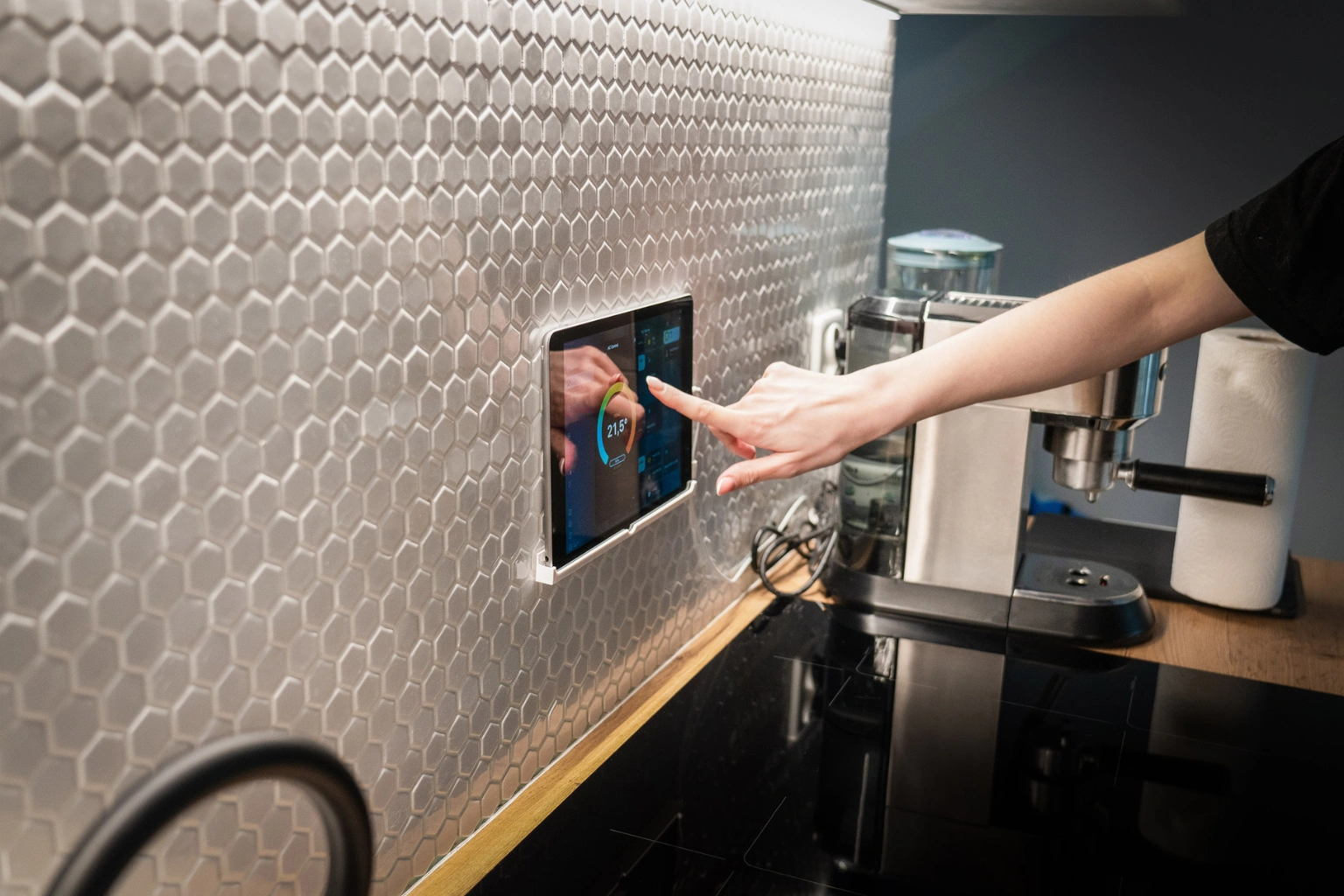
A smart thermostat like the Nest or Ecobee can learn your temperature preferences and automate adjustments throughout the day. For seniors who struggle to remember to adjust the heating or cooling, or who find it physically difficult to reach a wall-mounted control, a smart thermostat offers a simple, effective solution. You can control it remotely through an app, set schedules, or simply ask your smart home assistant to adjust it using a voice command.
Smart plugs are one of the most affordable and versatile smart home devices available. By plugging any standard appliance into a smart plug, you can control it remotely, set schedules, and automate when it turns on or off. For seniors who worry about leaving appliances on, smart plugs offer immediate peace of mind. They’re also a great way to dip a toe into home automation without committing to more complex installations.
The whole point of these devices is to make life easier, so the controls need to reflect that. Fortunately, there are several straightforward options:
Voice activation through a smart home assistant like Alexa or Google Assistant is probably the most accessible option; you just speak naturally, and the device responds. Mobile apps give you a visual interface that’s often cleaner and simpler than you might expect. And for anyone who’d rather avoid screens altogether, simplified remote controls offer a more familiar, button-based alternative.
The right choice depends on what feels most comfortable. There’s no wrong answer here. What matters is that seniors and their families find an approach that reduces friction rather than adding to it.
Even the most user-friendly smart home device can feel frustrating if it’s not set up correctly from the start. A professional installation service takes that stress off your plate entirely. Everything gets configured properly, you get a walkthrough of how it all works, and you’re not left staring at a blinking light wondering what went wrong.
For seniors who are new to this kind of technology, that smooth start can make the difference between embracing a new device and leaving it in a drawer. Professional installers who specialize in home care setups for older adults understand the unique needs of this demographic and can tailor their approach accordingly. Resources like this guide to smart home senior safety offer helpful context on what a professional setup can look like and why it matters.
Look for companies that have experience working specifically with older adults, not just general tech installers. Reading reviews, asking about their process, and checking what kind of ongoing support they offer are all sensible steps before committing. A good provider will be patient, clear, and genuinely interested in making sure you feel confident using what they’ve set up.
Home automation services designed for senior living should also offer follow-up support. Technology continues to evolve, and having someone you can call when something changes or stops working is an important part of a good service relationship.
Smart home technologies go beyond convenience; some devices are built specifically to keep seniors safe. A few worth highlighting:
What makes these devices particularly valuable is their ability to keep caregivers and family members in the loop without being intrusive. Seniors can maintain their privacy and independence, while their loved ones get the reassurance they need. For more on this topic, it’s worth exploring senior medical alert systems in more detail, which cover a range of options from basic pendants to sophisticated health monitoring devices with fall detection built in.
The cost of smart home safety devices varies widely, but many of the most impactful options are surprisingly affordable. When you consider the alternative, which is the cost of increased caregiver hours or a move to assisted senior living, the investment in smart home technologies for seniors often makes strong financial sense as well.
The benefits of smart home technology extend well beyond any single device or feature. When you look at the full picture, it becomes clear that these tools can fundamentally change the quality of life for seniors who want to live independently at home.
A smart home can help older adults reduce the need for constant caregiver supervision, which preserves both dignity and independence. Connected devices can flag potential problems, from unusual inactivity detected by a motion sensor to a front door left unlocked overnight, before they become serious issues. Home monitoring systems give families the reassurance they need to feel comfortable with a loved one aging at home alone.
For seniors and their caregivers, the ability to share data from health monitoring devices and security systems means that everyone stays informed without requiring constant check-in calls. This kind of connected approach to home care is one of the most meaningful ways that technology can help support aging in place.
Older people who use smart home technology consistently report greater confidence in their ability to manage daily life. The ability to call for help instantly, to control their environment with a voice command, and to know that their home is secure gives seniors the freedom to live more fully. These are not small things; they represent a genuine shift in what’s possible for older adults to maintain independence well into their later years.
As technology continues to evolve, the range of options available to help seniors age in place safely will only expand. From more sophisticated fall detection systems to AI-powered health monitoring, the future of smart home technology for older adults is promising. Staying informed about new developments and working with knowledgeable professionals can help seniors and their families make the most of what’s available.
Mary, an 82-year-old retiree, didn’t expect a smart doorbell to change much about her daily life. But once it was set up, she found herself feeling noticeably more secure at home, able to see exactly who was at the door without getting up, without guessing, and without opening the door to a stranger. The peace of mind for seniors like Mary is difficult to quantify, but it’s very real.
Her experience isn’t unusual. Many seniors who’ve started using smart home devices report similar shifts: a greater sense of control, less anxiety about day-to-day safety, and a welcome reduction in the small frustrations that come with managing a home alone. Seniors to live independently for longer is the goal, and smart home technology offers seniors the ability to do exactly that.
Others describe how smart lighting systems have helped them navigate their homes safely at night, how smart plugs have eliminated the worry of leaving appliances on, and how voice-activated reminders have made it easier to stay on top of medications and appointments. These are practical, everyday improvements that add up to a meaningfully better experience of home life.
If you’re thinking about getting started, the advice from people who’ve already made this transition is pretty consistent: start small. Pick one device, get comfortable with it, and then decide if you want to add something else. Don’t let anyone pressure you into a full system overhaul before you’re ready.
Having a family member help with the initial setup also makes a significant difference. Not because the technology is impossibly complicated, but because having someone patient and familiar walk you through it removes a lot of the anxiety. Seniors and their families who approach this process together tend to have better outcomes and greater long-term satisfaction with their smart home setup. You can find a broader overview of smart home technology for seniors if you’d like to explore your options before deciding where to begin.
The consensus among older adults who have embraced these tools is clear: the adoption of smart home technology is most successful when it’s gradual, supported, and driven by real needs. Smart home devices like smart speakers, smart locks, and health monitoring devices have all found enthusiastic users among seniors who once thought they weren’t “tech people.” The right device, properly set up and explained, can change that perception quickly.
Smart home technology doesn’t have to be intimidating, and it doesn’t have to happen all at once. Starting with a single device, something simple that solves a real problem in your daily life, is a completely valid approach. Over time, as you get more comfortable, you can build from there.
The payoff is real: more safety, more independence, and a home that works a little harder for you. Smart home technology offers seniors the ability to age in place safely and independently, with the confidence that comes from knowing help is always within reach. Whether it’s a smart speaker that can call for help, a motion sensor that lights your path at night, or a doorbell that lets you see who’s visiting without leaving your chair, these tools are designed to give seniors more control over their lives.
Smart home technology can help older adults maintain their independence, support aging in place, and improve the overall quality of life for seniors who choose to remain in their own homes. That’s worth exploring, no matter where you’re starting from.
What are the best starter devices for seniors?
Smart speakers, basic security systems, and smart lighting are all solid starting points. They’re user-friendly, genuinely useful, and don’t require a lot of technical knowledge to operate. A smart home assistant like the Amazon Echo or Google Home is particularly accessible because it responds to natural voice commands, making it ideal for older adults who prefer not to navigate apps or small buttons.
How can seniors control these devices without it being complicated?
Voice commands are the simplest option for most people; you just speak naturally, and the device responds. Mobile apps are another accessible choice, and simplified remotes work well for anyone who prefers physical buttons over screens. Many smart home devices, like smart plugs and smart lights, can also be set to automate on a schedule, so you don’t need to interact with them at all once they’re configured.
Are there professional installation services that work with seniors?
Yes, and they’re worth looking into. Many companies specialize in setting up smart home devices for older adults, making sure everything works correctly from day one and that you feel confident using it. A good installer will also explain how to use each device clearly and offer follow-up support as needed.
How do smart home technologies support aging in place?
Smart home technologies support aging in place by automating everyday tasks, improving home safety, and keeping caregivers informed without requiring constant supervision. Fall detection systems, health monitoring devices, medication reminders, and smart security systems all work together to help older adults age in place safely. These tools reduce the need for round-the-clock assistance while giving seniors and their families the peace of mind they need.
What is the cost of smart home devices for seniors?
The cost of smart home devices varies widely depending on the type and complexity of the system. Basic smart plugs and smart lights can cost as little as $15 to $30 per device, while comprehensive security systems and health monitoring devices may involve higher upfront costs and monthly subscription fees. When weighed against the cost of increased care or a move to assisted senior living, many families find that smart home technologies offer excellent value.